
Sometimes I feel like I’m standing on top of a mountain, calling down to the people below about a wave coming over the horizon.
Either they can’t hear me, or what I’m saying sounds so far-fetched that they laugh. I understand how I sound. I’m talking about a future in which diseases we’ve spent our lives fearing become things we know how to treat, prevent, or cure.
And this is a wave I desperately want to see arrive.
I’ve been following Demis Hassabis and his team at Isomorphic Labs. Now I’m reading about Claude helping scientists find something in biology they hadn’t understood before. Both developments keep bringing me back to one question:
What happens when we get much better at finding medicines?
Imagine what that could mean for someone who has just been told there are no more treatment options. Or for a family trying to work out how much time they have left together.
That’s why I think more people should be paying attention. And there is a piece of history that helps explain why.
We’ve changed what families have to fear before
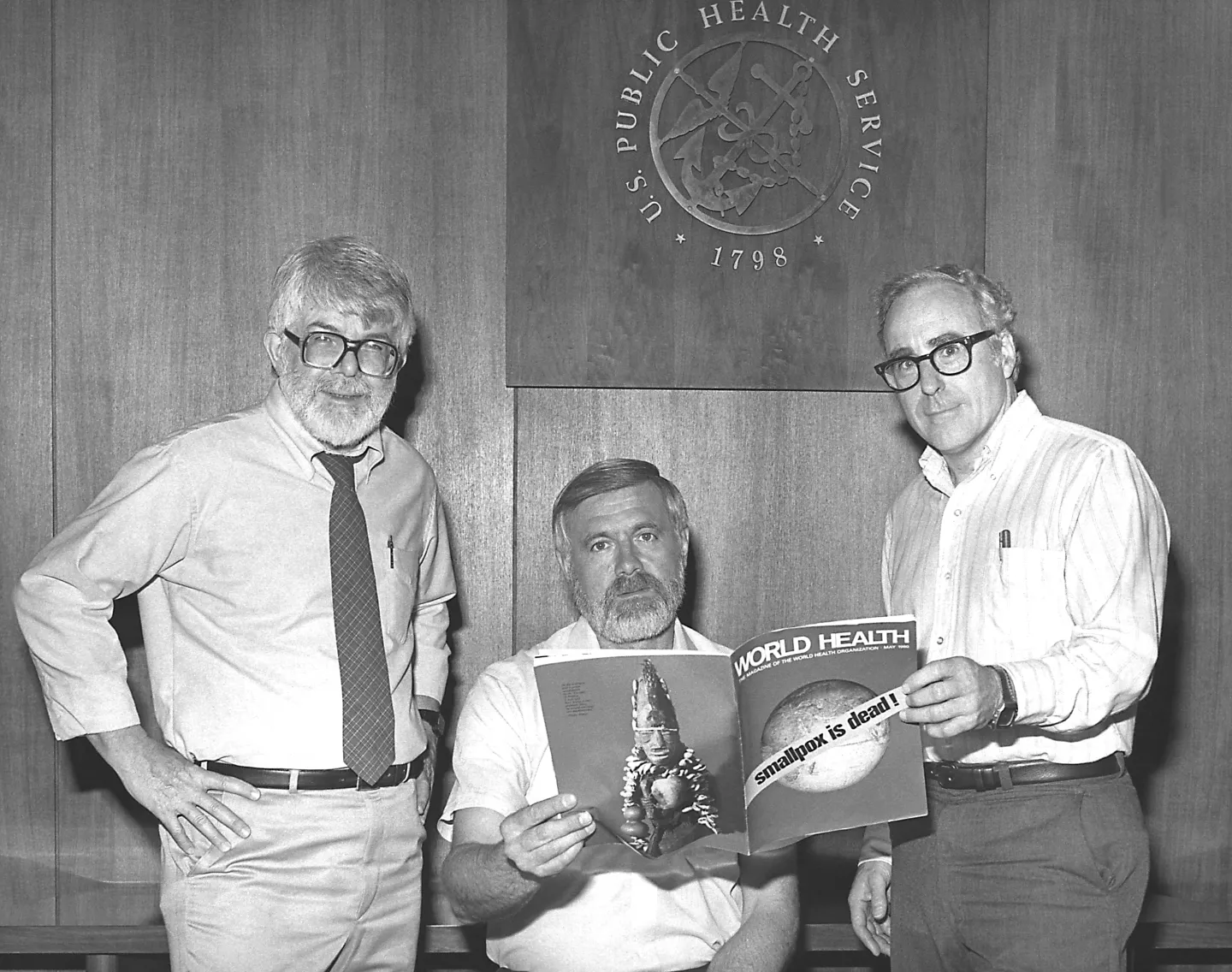
When was the last time you worried about smallpox?
For most of us, the answer is never. Yet this disease once killed millions. In 1980, the world declared it eradicated. Vaccination, health workers, and a worldwide effort to find cases and stop its spread made that possible.
Think about the scale of that change. Children could grow up without facing a disease that had devastated generations before them. We live on the other side of that achievement.
Curing cancer will take different solutions. Cancer includes many different diseases, and preventing an infection from spreading is different from treating cancer that has already developed.
But smallpox gives us a reason to question whether the fears we inherited have to be the fears we pass on.
I believe we will learn to prevent or cure the cancers that still take people from us today. And I believe AI will help us get there faster than most people expect.
That is my prediction. Here is what I’m seeing that makes me believe it.
Something caught Claude’s attention
On September 23, Anthropic, the company behind Claude, announced a discovery in biology. Its scientists had asked Claude to search a large collection of DNA data for something worth investigating.
Claude noticed a repeating pattern near a gene scientists had seen before. It looked more closely and checked whether anyone had already described the arrangement. The finding pointed researchers toward a biological system they hadn’t yet understood.
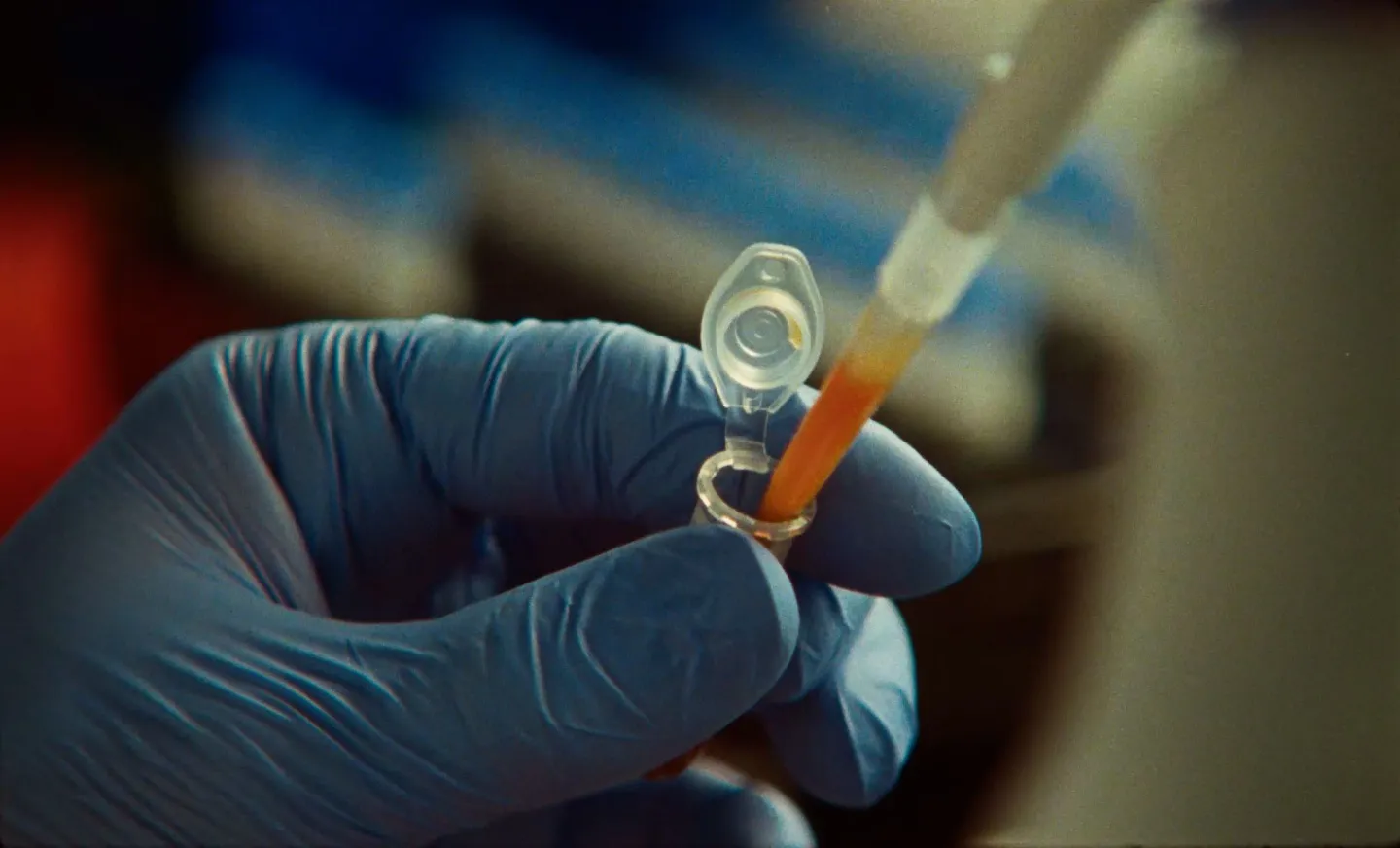
Human scientists did the experiments in the lab. They’re still working out what this system does and whether it could become useful. This discovery has not produced a treatment.
What caught my attention was the step that came before the experiments. Software had helped find an overlooked detail and followed it far enough to give scientists a new question to investigate.
Think about how much there is left to discover. If AI can reliably help researchers notice things they would otherwise miss, how many more promising questions might we get to ask?
Demis has an ambitious goal
The mission on Isomorphic Labs’ website is three words: “Solve all disease.”
I know how that sounds. I also find it exciting that a team is willing to organize its work around a goal that big.
One of the problems it is tackling is easier to picture than the research language makes it sound. Where could a potential drug attach to a protein in the body? How tightly would it hold on? Those questions help scientists decide which molecules are worth developing into medicines.
In its February research update, Isomorphic reported that its new system was better at several of these predictions in computer tests. That could give scientists a clearer idea of what to try next. A computer prediction still needs to be tested in the real world.
Anthropic and Isomorphic are working on different parts of the problem. One is exploring unfamiliar biology. The other is improving tools for designing possible medicines.
I see reasons for hope in both. And they lead to a possibility bigger than either announcement.
What if more good ideas got a chance?
Picture a research team with ten promising ideas and enough time to pursue two.
The other eight might contain something useful. But people have limits. There is only so much time to read the evidence, compare possibilities, plan experiments, and figure out what to do next.
Now imagine that team gets much better help with those steps. Perhaps it can investigate a question that has been sitting untouched for years. Perhaps it can spot a dead end earlier and spend its time on something more promising.
That is what excites me about AI in science. We could give more good ideas a serious chance.
More ideas will still require careful judgment. AI can suggest plenty of bad ones, too. Scientists have to work out which ones deserve their attention.
But if these tools become dependable, the gains could reach far beyond a single project. More teams could explore more questions. Some of those questions could lead to treatments people are waiting for today.
In The Age of Imagineering, I wrote about the shrinking distance between an idea and something we can build. Here, I see a chance to shorten the distance between a scientist’s hunch and finding out whether it could help someone.
For a family waiting on an answer, that distance matters.
A good idea still has to help a person
There is a long way between finding something interesting and giving a patient a treatment that works.
The questions are straightforward. Does it help? What harm could it cause? What happens when people take it for months or years? As the FDA explains, studies in people are how researchers begin to answer those questions. Some answers take time.
We already have examples of AI-designed drugs reaching that stage. A 2025 study in Nature Medicine tested a drug called rentosertib for a serious lung disease. The study involved 71 patients over 12 weeks and focused mainly on safety. It also found an encouraging improvement in a breathing test in one treatment group.
The study recorded unwanted health effects, and some people stopped treatment. Larger, longer studies are needed to understand how well the drug works and what risks it carries.
That is a real step worth following. It gives us something we can examine, question, and learn from.
In The Verification Age, I wrote about the importance of proving that something works. In medicine, that means showing that a treatment actually helps the person taking it.
I expect progress to come through specific successes, with failures along the way. Each treatment that works would give us another reason to keep going—and another group of families whose future could change.
Even a few of those successes could change millions of people’s lives.
This is personal for me
I grew up in a medical family. My father was a doctor. My mother was a critical care nurse. I spent nights and weekends around the hospital as a kid, seeing how sickness affects an entire family.
A hospital could be a place of enormous hope. It could also be the place where someone’s whole world changed in a single conversation.
My father practiced medicine for decades. Pancreatic cancer took him anyway.
So when I read about a possible advance, I understand the pull of wanting to believe. I also understand why people hesitate. If you’ve lost someone, imagining a treatment that might have helped them can hurt.
When I think about curing disease, I think about another phone call with my dad. I think about someone making it to a birthday they were afraid they would miss. I think about a family booking a trip without wondering whether everyone will still be well enough to go.
That was the feeling behind We Cure the Disease. Then What? More healthy years could give people room to make plans again.
I bring two parts of my life to this question: years spent around medicine and my work with AI today. Those experiences shape my intuition about where this is heading. They are why I keep asking what these tools could mean for the people waiting on an answer.
That experience is why this feels so personal. When I look at these discoveries, I see the possibility of other families getting the time mine didn’t.
What would change for you?
If better treatments arrive faster than we expect, we’ll have work to do. How do we get them to the people who need them? How do we make sure families can afford them? What would you do differently if you believed you might have more healthy years ahead?
Those questions feel close enough to start asking now.
That is what I’m trying to say from the mountain. I believe the future of medicine will look profoundly different from the world we grew up in. I don’t know the date. I do believe we’re going to get there.
There are families running out of time today. I want more of them to hear that there is something else we can try.
If we cured cancer tomorrow morning, how would your life change?
Who comes to mind when you read that? If you’re comfortable sharing, I’d love to hear what that future would mean to you.
Sources reviewed September 25, 2026. The research links explain what has been found so far. The hopes and expectations about what comes next are my own.
AI engineer, builder, and author of The Age of Imagineering.